

European Universities
What is the European Universities Initiative?
The European Universities Initiative is one of the flagship programmes of the European Union to build a European Education Area, co-developed by higher education institutions, student organisations, Member States and the European Commission.
European Universities are transnational alliances that will become the universities of the future, promoting European values and identity, and revolutionising the quality and competitiveness of European Higher Education.
As of October 2025, there are 65 European Universities Alliances funded by the EU. There are also 8 universities alliances that have received the Seal of Excellence in 2024, a quality label awarded to proposals of universities alliances that did not receive funding through Erasmus+ due to budgetary constraints. Despite not having received Erasmus+ funding, several universities alliances have already started their activities.
UNICA members in the European Universities Alliances
36 out of the 52 UNICA member Universities take part in European Universities alliances. In other terms, 23 out of the 65 existing funded alliances have at least one UNICA member University as partner. One UNICA member university is also part of one of the Alliances that was granted the Seal of Excellence.
What UNICA does in the context of the Alliances
With 36 UNICA members participating in the Alliances (including 3 Associate Members) and one member in an Alliance holding a Seal of Excellence, the network still counts 15 members outside the initiative (7 of which are not eligible for full participation). This situation presents both an opportunity and a responsibility for UNICA: the opportunity to support its members in navigating the initiative, and the responsibility to foster inclusion by ensuring that those outside the initiative remain informed and engaged. UNICA also acknowledges that alliances and alliances have different, yet, complimentary objectives, with the former aiming for deeper integration among members and cohesive educational experiences, while the latter, due the nature of informal collaboration among members, can be more active in advocacy & policy efforts.
For these reasons, UNICA has decided to embrace an “umbrella” role, which allows the network to be:
- Inclusive, meaning it brings together a wide range of actors (directly and indirectly involved), representing different voices;
- Compreehensive, because it connect different themes, models, and approaches;
- Observing, as the network watches developments from outside with the aim of identifying emerging trends, gaps, challenges, and opportunities;
- Monitoring, because it can track progress and impact over time, offering evidence-based insights and feedback that inform both policy and practice.
… alliances emerged through the initiative of the European Commission, and thereby funding was conditional upon pre-established priorities and political goals (…), whereas networks emerged from a bottom-up organic approach that is closer to the idea of a (labour) “union” of Universities, which – in that sense – enjoy relative independence – namely to voice concerns and establish priorities before government representatives and decision-making bodies.
Excerpt from the Conference Report of the UNICA Days in Brussels 2025, dedicated to the role of university networks in the context of the European Universities Alliance (Feb 2025)
Recent events
-
3 June 2025
UNICA – 4EU+ Alliance webinar: “Lifelong Learning Revisited: Can Universities and Alliances Become New Hubs for Reskilling and Upskilling?” | 3 June
Online
European Universities UNICA EduLAB -
26-28 Feb 2025
UNICA Days 2025 | “The role of university networks in the context of the European Universities alliances”, Brussels, 26-28 Feb 2025
Brussels
UNICA Days European Universities
-
21 Feb 2024
UNICA EduLAB – 4EU+ webinar: The European Degree, Students’ involvement and the role of European universities alliances I 21 February 2024, 10h00 – 11h40 CET
Online
UNICA EduLAB European Universities -
25 May 2023

UNICA – EUTOPIA 3rd webinar: How European University Alliances can support citizen science | 25 May 2023
Online
UNICA & the City European Universities -
12 May 2022

How European University Alliances address the question of well-being
Online
UNICA & the City European Universities -
15 Dec 2021
UNICA and Sapienza University of Rome webinar “Supporting students and scholars at risk: efforts and good practices of UNICA and CIVIS universities”
online
European Universities -
09 Dec 2021

UNICA EduLAB & CIVIS webinar: New European curricula for the new European Degrees. From bulk learning to modularisation
Online
UNICA EduLAB European Universities -
15 November 2021

IRO Group workshop “European Universities alliances and IROs role”
online
International Relations Officers European Universities -
30 Sep 2021

UNICA Rectors’ Seminar “The Future of the European Universities Alliances”
online
Rectors Seminars European Universities -
30 Nov 2020

European Universities Initiative: Sharing good practices, lessons learned and plans among UNICA Members
European Universities Rectors Seminars -
19 Nov 2020
UNICA General Assembly 2020 & Rectors Seminar
Online
Rectors Seminars General Assemblies European Universities -
23 Jun 2020

Webinar “Innovating HE Pedagogy in Turbulent Times” (University of Bucharest, UNICA, CIVIS)
Online Conference
UNICA EduLAB European Universities -
28 & 29 Nov. 2019
UNICA General Assembly 2019
London, United Kingdom
General Assemblies European Universities -
28 Feb. to 1 March 2019

UNICA Rectors Seminar Shaping the University of the 21st century, Universidad Complutense de Madrid
Universidad Complutense de Madrid, Rectorate Building, Avenida de Séneca 2, Madrid
Rectors Seminars European Universities -
24 & 25 May, 2018

Rectors Seminar: Networking of university networks: synergy of partnership
University of Belgrade
Rectors Seminars European Universities
Latest news
-
14 May 2025

One step closer to the European Degree: Council of the EU approves 2 keys texts for the future of European Higher Education
From UNICA
-
04 Apr 2025
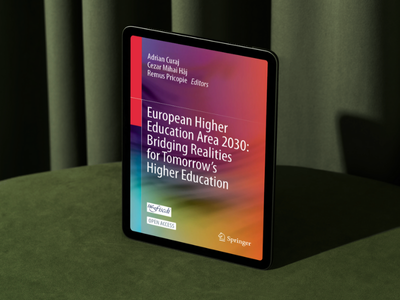
New open access book featuring contributions from UNICA members explores the future of the EHEA
From UNICA - From our Members - European Universities
-
04 Jul 2023

European University Alliances 2023: 16 UNICA members in 11 alliances set to continue receiving support from Erasmus+
European Universities
 Co-funded by the European Union. Views and opinions expressed are however those of the authors only and do not necessarily reflect those of the European Union or the European Education and Culture Executive Agency (EACEA). Neither the European Union nor the granting authority can be held responsible for them.